
When you type the keywords "inclusive play" or "inclusive playgrounds", you will find many pages with content such as: what inclusive play and inclusive playgrounds are, where to find them, who supplies such inclusive play equipment, and much more.
Going deeper, you will notice that most traditional inclusive playgrounds tend to target children with physical disabilities and barely address other, able-bodied children. That is a major shortcoming.
The question is: what is the point of an inclusive experience if it ignores more than 90% of the world's children, the able-bodied children who are fully entitled to play?
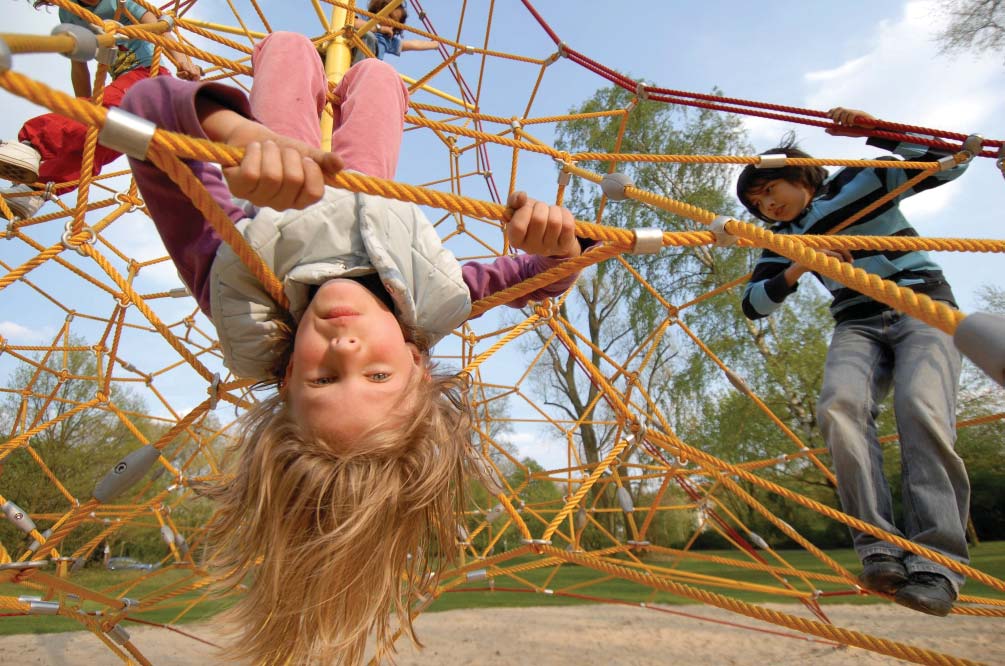
Many pieces of equipment offer "inclusive" experiences, but rope play equipment and climbing nets stand out above all because they suit everyone and give anyone a unique experience.
What is an inclusive playground?
In general, inclusive play is a bridge between ordinary play and children with special needs. Inclusive play helps children connect better with their playmates and opens up a wide world around them.
Inclusive play is an environment that supports children in improving their social communication skills. Understanding and sympathizing with each other's differences is the key point that helps children become more confident and comfortable when communicating with others.
When children play together without regard to differences in gender, skin colour or personality, that is what builds equality in the society of the future.
How do accessible and inclusive playgrounds differ?
An accessible playground that meets the ADA standard is a park that everyone, able-bodied or disabled, can reach and play in. For example, children in wheelchairs can still reach the top of a tower thanks to gentle ramps around it.
The ADA standard means:
All parks, when built, must make it easy for everyone to enter and leave, by building flat paths that are not blocked by any obstacle. Paths and rail systems must be convenient for people with disabilities as required by the ADA. For example, the rule on installing a taut rope so that visually impaired children can find their way without a guiding cane. This lets children climb freely and comfortably with both hands.
On the other hand, an inclusive playground is for even more members of society: able-bodied people, disabled people, and even people with Down syndrome, ADHD and sensory impairments such as visual or hearing loss can take part in the endless play here. All the equipment used is irresistibly attractive and gives everyone fun, enjoyable experiences.


